


White Banarasi Sarees in Pure Silk & Real Zari
Find Your Perfect Banarasi Weave
Pick an occasion — we'll point you to the weave that suits it best.
Katan Silk
Rich, smooth, with a soft sheen — the classic choice for weddings and big rituals.
Shop Katan Silk sarees→GI Certified · Handwoven by 4th-generation artisans in Varanasi
White Banarasi Sarees in Pure Silk & Real Zari
Every white Banarasi saree we make is woven on handlooms in Varanasi — using pure mulberry silk and real silver or gold zari. No power-loom shortcuts. No synthetic threads. Just weaving the way it has been done for four generations.
White Banarasi — Pick Your Silk
Same pure white, different weave feel. Choose the silk that suits your occasion and draping style.
Why White Banarasi Sarees Are Different
White is not the absence of colour in Banarasi weaving — it is the hardest colour to get right.
Zari Shows Its Best on White
Gold and silver zari pops brightest against a white or ivory silk base. The contrast is unmatched — something coloured sarees cannot replicate.
Bridal & Haldi Ready
White Banarasi is the traditional choice for Bengali, Tamilian and Maharashtrian brides. It is also the modern bride's choice for pre-wedding ceremonies.
Harder to Weave, Longer to Wear
A pure white silk saree needs immaculate hands throughout the weaving process. Any oil or dust shows. That care is what makes it last a lifetime.
Natural Mulberry White
Our white threads are not bleached or chemically treated. The natural ivory-white of pure mulberry silk holds its glow for decades — it only gets better with age.
No Two Pieces Are the Same
Because every saree is handwoven, the placement of zari motifs — paisleys, jharokhas and floral bootis — differs slightly on every piece. You own one of a kind.
Passes All 3 Certifications
GI Tag, Silk Mark and Handloom Mark. All three. Not just one for marketing. White Banarasi from The Panaya is the real thing with documents to prove it.
Every Occasion Has a White Banarasi
Wedding Bride
Bengali, Tamil & Maharashtrian bridal traditions favour white silk with real zari.
Haldi & Mehendi
White Kora or Organza is the cleanest, coolest choice for daytime ceremonies.
Temple & Puja
Traditionally, white cotton and silk are considered among the most auspicious colours for worship.
Convocation & Awards
A white Tissue or Georgette Banarasi creates a graceful, confident statement on stage.
Eid & Festive Evenings
White zari sarees are popular for Eid, Teej and South Indian festive celebrations.
International Wear
Pure white Banarasi silk travels beautifully across cultures and international occasions.
Shoots & Content
White Banarasi photographs beautifully. The zari reflects light perfectly in every frame.
Gifting
A timeless Banarasi gift suitable for every generation—from daughters to grandmothers.

Off White Katan Silk Saree — Kadwa Boota
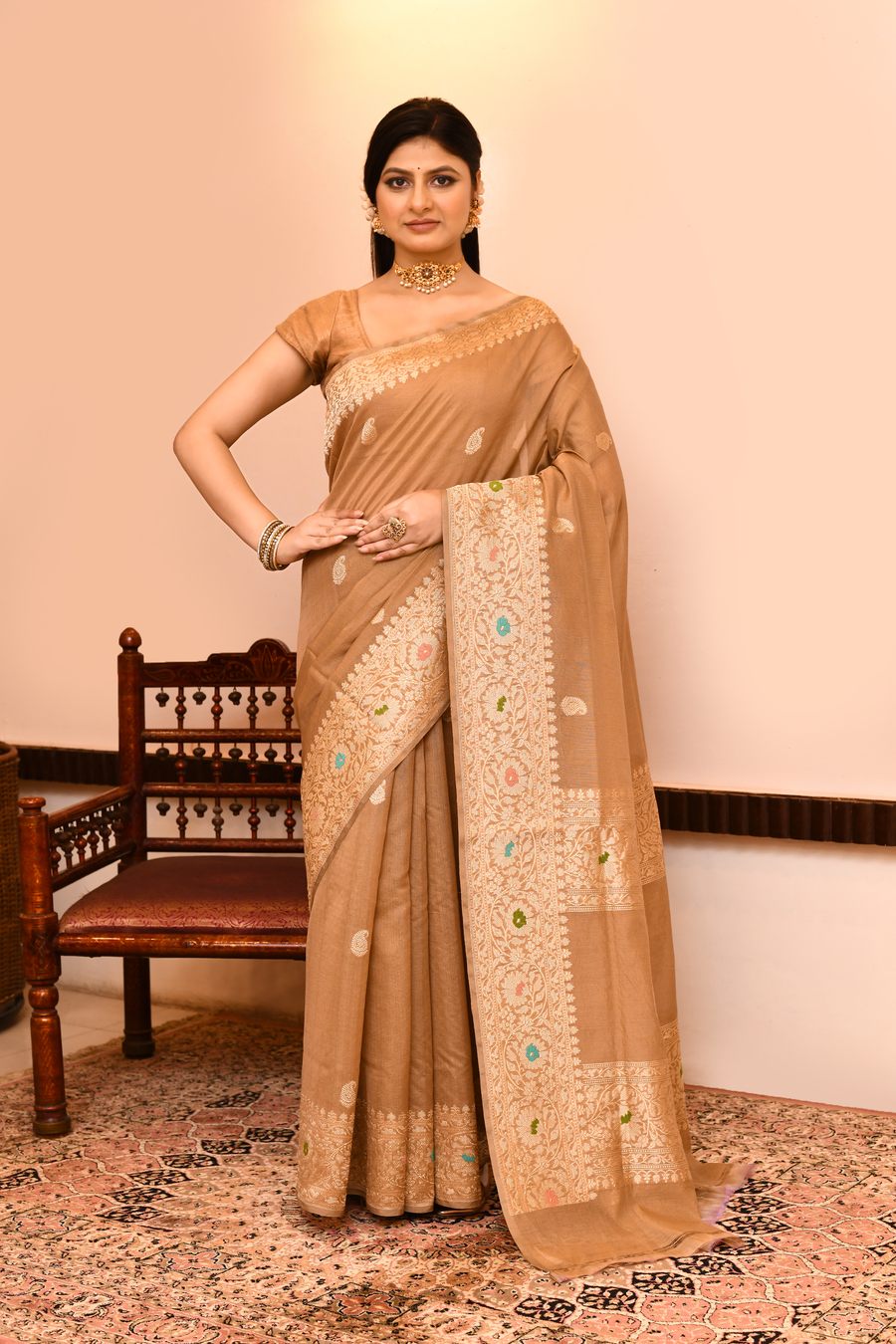
Off-White Kora Silk Saree — Kadwa Booti
Which White Silk Is Right For You?
Here is a plain-language guide — no weaving jargon, just honest comparisons.
Katan Silk
Shop →The Classic Bridal White
Katan silk is woven from twisted silk yarn, giving it a firm body and luxurious drape. Perfect for weddings, receptions and heirloom pieces that hold their shape beautifully.
Georgette Silk
Shop →The Everyday White
Soft, lightweight and fluid. White Georgette Banarasi sarees are ideal for parties, travel, office wear and elegant family occasions.
Kora Silk
Shop →The Summer White
Kora silk has a naturally crisp texture with breathable comfort, making it a wonderful choice for haldi ceremonies and warm-weather celebrations.
Organza Silk
Shop →The Ethereal White
Sheer and graceful. Organza creates a soft luminous look that's perfect for temple visits, photoshoots and evening celebrations.
Tissue Silk
Shop →The Golden White
Tissue silk blends shimmering zari into the weave, creating a naturally radiant fabric that glows beautifully during weddings and festive occasions.
Looking for All Colours?
Our white Banarasi sarees are part of a larger handwoven collection featuring every colour, silk type, weaving style and zari pattern. Browse the complete collection and discover the perfect saree for weddings, festivals and everyday elegance.
View Full Banarasi CollectionWhite Banarasi Saree — FAQs
Yes. White Banarasi sarees are popular bridal choices in Bengali, Tamil and Maharashtrian traditions and are increasingly worn for haldi, mehendi and destination weddings. Heavy zari Katan silk is especially preferred for bridal wear.
Katan silk is heavier with a structured drape, making it ideal for weddings and receptions. Kora silk is lighter, crisp and breathable, making it perfect for summer functions and daytime ceremonies.
Yes. Every saree carries the Banarasi GI Tag along with Silk Mark certification and is handwoven by artisan families in Varanasi.
Dry clean only. Store inside a soft muslin cloth, avoid plastic covers, keep away from moisture and direct sunlight, and refold the saree every few months to preserve the zari.
White Banarasi sarees are commonly woven with Kadwa Booti, Jaal, Shikargah and Meenakari zari work using genuine gold or silver zari depending on the collection.
Yes. We accept custom orders for bridal designs, blouse customization, zari preferences and special weaving requirements. Contact our team for assistance.
Katan, Georgette, Organza or Tissue — which silk is actually right for you?
Every silk drapes, shines and ages differently. Here's an honest, side-by-side look — so you know exactly what you're buying before you add to cart.
Every Panaya Katan Silk saree is GI Tagged and Silk Mark certified — verified pure, verified Varanasi.
The Lanes of Varanasi Behind Every Panaya Saree
Your saree is not made in a factory. It is made in a narrow lane, on a hand loom, by a family that has been weaving for generations. Here are the actual mohallas (neighbourhoods) where our karigars live and work.
Lallapura
Known for: Katan silk & zari brocade weaving
One of the oldest weaving lanes in Varanasi. Our Katan silk sarees with heavy zari work come from a small group of looms here, run by families who have woven for over four generations.
"Aapki saree iss gali se aayi hai."
Madanpura
Known for: Tissue silk & fine Jaal patterns
A dense weaving neighbourhood where most homes still have a pit loom in the front room. Our tissue silk and intricate Jaal-pattern sarees are woven here, often taking over a month per piece.
"Aapki saree iss gali se aayi hai."
Alaipura
Known for: Kadwa booti & Tanchoi weaving
An old, historic weaving lane known for the Kadwa technique, where each motif is woven separately by hand instead of being repeated mechanically. Our Kora silk sarees with Kadwa booti work come from here.
"Aapki saree iss gali se aayi hai."
Jaitpura
Known for: Jamdani & brocade weaving
One of the oldest and most historic weaving zones in Varanasi, traditionally known for fine Jamdani and brocade work. Several of our heavier, festive-occasion sarees are woven by families settled in this lane.
"Aapki saree iss gali se aayi hai."
We work directly with karigars in these mohallas — no middlemen, no anonymous factories. When you buy from Panaya, you are buying directly from the family that wove it.