
Bridal
Banarasi Sarees
A wedding trousseau is not complete without a Banarasi saree. From the first haldi to the final reception, our handwoven silk sarees are made to be photographed, remembered, and passed down.

What actually makes a saree "bridal"
Not every silk saree is built for a wedding. Here is what separates an everyday Banarasi piece from a true bridal one.
Zari Density
Bridal sarees carry heavier, denser zari work — usually a full Jaal (all-over lattice) rather than scattered booti motifs — so the shine reads clearly even from a distance.
Weaving Time
A bridal-grade Kadwa Jaal saree can take a single weaver over a month to finish, compared to a week or two for a lighter, everyday piece.
Colour & Weight
Deep, rich shades and a heavier drape are traditional for the main wedding day, while lighter colours and weights suit pre-wedding functions.
Which saree for which function
Most brides don't wear one saree — they wear one for each function. Here is a simple way to plan it out.
Lighter Katan silk in yellow, ivory or pastel shades with minimal zari — practical for a function involving turmeric and flowers.
Pastels or brights in Kadwa booti work strike the right balance — festive, but not as heavy as the main wedding piece.
Jewel tones such as purple, magenta or emerald with a full Jaal pattern hold up well under stage lighting and photography.
Deep red, maroon or wine in Katan or Tissue silk with a dense Jaal or Sikargha pattern — the traditional, heaviest piece of the trousseau.
A second statement colour — often a rich pink, wine or purple — lets the bride repeat the bridal weight without repeating the wedding-day shade.
Bridal Banarasi Sarees, Ready to Wear
Real sarees from our Varanasi looms, chosen for their weight, zari density and colour — each one suited to a wedding-day or reception look.
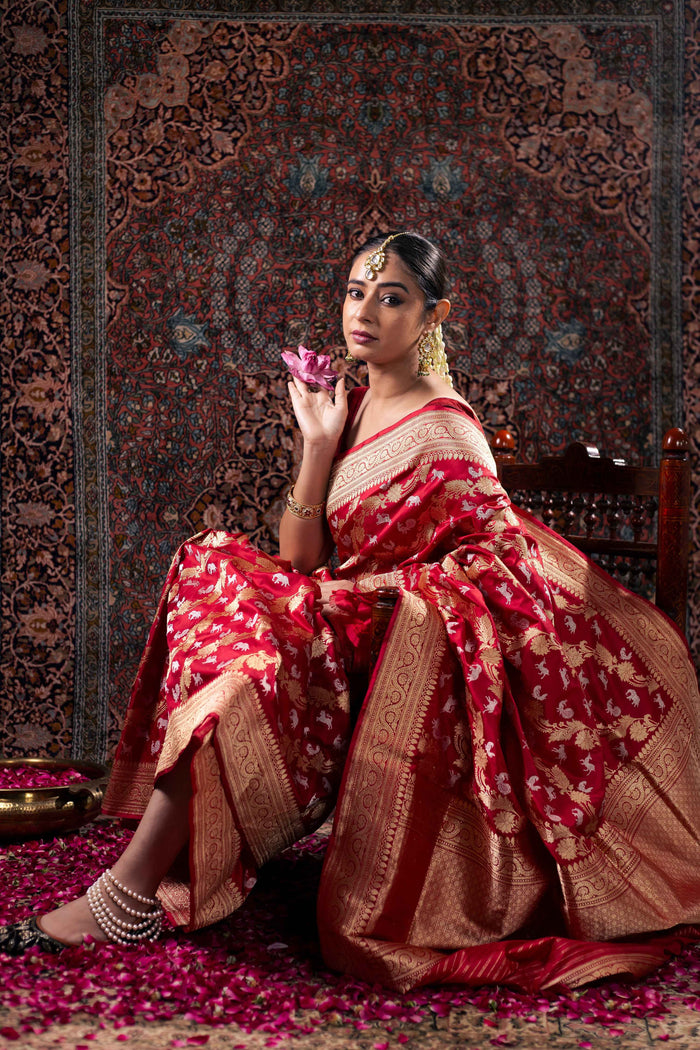


A quick checklist for bridal saree shopping
Four things worth checking before any bridal saree order, silk or otherwise.
Silk Mark or GI Tag
Confirms the saree is genuine handloom silk, not a power-loom or blended imitation.
Order Timeline
Heavy Jaal pieces are made to order and can take weeks — order at least a month before the function.
Blouse Piece Included
Check whether an unstitched blouse piece comes with the saree so your tailor has matching fabric.
Return & Exchange Policy
Bridal pieces are a big investment — always confirm the return window before you pay.
What brides usually ask us
How many sarees does a bride usually need?
Most brides plan for four to five — one each for haldi, mehndi, sangeet, the wedding day, and the reception. You don't need all of them in Banarasi silk; many brides keep the wedding day and reception pieces silk and go lighter for the rest.
How far in advance should I order a bridal saree?
For a heavy Jaal or Sikargha piece, order at least four to six weeks ahead. Lighter Kadwa booti sarees can be ready sooner.
Can the blouse be stitched to my size?
Sarees come with an unstitched blouse piece so any local tailor can stitch it to your exact measurements and preferred design.
Is Katan or Tissue silk better for a wedding day?
Katan silk has more body and structure, which holds pleats well through a long day. Tissue silk is lighter and drapes more fluidly — a matter of personal comfort more than "better" or "worse."
Planning your wedding trousseau?
See the full range of bridal Banarasi sarees, across every colour and function, all woven in Varanasi.