
Banarasi Saree Manufacturer in Varanasi
The Panaya weaves every Banarasi saree by hand, inside the old karigar lanes of Varanasi — Lallapura, Madanpura, Alaipura and Jaitpura. No factories, no middlemen, no power-loom shortcuts. Just pure mulberry silk, real zari, and a GI Tag to prove it.

GI Tagged Origin
Registered proof that your saree was genuinely made in Varanasi, not a copy from elsewhere.

Silk Mark Certified
Every fabric batch is lab-tested to confirm it is pure mulberry silk, not art-silk or polyester.

Handloom Mark
Confirms the saree was woven by hand on a pit loom — never on a power loom.

Association Member
Recognised member of the Banarasi Vastra Udyog Association, Varanasi's official weavers' body.
Not a Trader. A Working Manufacturer in Varanasi.
Most sellers online buy finished sarees from a wholesale market and resell them. The Panaya is different — we are Kamalya Textiles, a manufacturing house that runs its own looms with karigar families across Varanasi's weaving mohallas.
Owned Looms, Not Resale Stock
Every saree begins as raw silk yarn on our karigars' looms — we control quality from the first thread to the final finish.
Four Generations of Karigars
Our weaving families have worked the same pit looms for over 100 years, passing the craft from father to son.
GI Tag on Every Piece
Genuine GI registration, not a printed sticker — proof your saree truly comes from Varanasi.
Shipped Pan-India, Direct
From our looms in Chaukaghat, Varanasi straight to your door — no distributor markup in between.
Inside a Panaya Banarasi Saree
From raw mulberry silk to a finished heirloom, every saree passes through the same hands, the same lanes, and the same checks it always has.
Naksha & Design Planning
Our designers translate a motif — a booti, a jaal, a bird pattern — into a punch-card graph that will guide the loom, a tradition going back to the original Jacquard looms of Varanasi.
Yarn Selection & Warping
Pure mulberry silk yarn is sorted, twisted and stretched onto the loom's warp beam — this single step alone can take a full day for one saree.
Dyeing in Small Batches
Silk hanks are hand-dyed in small lots so every shade — magenta, peacock, wine, off-white — stays consistent across a saree's full length.
Handweaving on the Pit Loom
The karigar sits at a traditional pit loom, throwing the shuttle by hand for the base weave — Katan, Kora, Georgette, Organza or Tissue — depending on the saree.
Zari & Booti Work (Kadwa / Tanchoi)
Real zari is woven in using the Kadwa technique, where every motif is placed by hand rather than repeated mechanically — this is what separates a real Banarasi from a machine copy.
Finishing & Quality Check
Loose threads are trimmed, the pallu and border are inspected, and the saree is checked against our in-house quality standard before it leaves the loom.
GI Tag & Silk Mark Certification
Only after passing inspection does a saree receive its GI Tag and Silk Mark — your assurance that it was genuinely handwoven in Varanasi from pure silk.
The Karigar Lanes Behind Every Panaya Saree
Our production isn't in a single factory — it's spread across the historic weaving mohallas of Varanasi, each known for a different technique.
Katan Silk & Zari Brocade
One of Varanasi's oldest weaving lanes. Our heavy zari Katan silk sarees come from a small cluster of looms here, run by families who have woven for over four generations.
Tissue Silk & Fine Jaal Work
A dense weaving neighbourhood where most homes still keep a pit loom in the front room. Our tissue silk and intricate jaal-pattern sarees are woven here, often over a month per piece.
Kadwa Booti & Tanchoi Weaving
A historic lane known for the Kadwa technique, where each motif is placed by hand rather than repeated mechanically. Our Kora silk sarees with Kadwa booti work come from here.
Jamdani & Brocade
One of the most historic weaving zones in the city, traditionally known for fine Jamdani and brocade work. Several of our heavier, festive-occasion sarees are woven by families settled here.
How to Recognise a Real Manufacturer-Made Banarasi
Power-loom copies from trading companies are sold as "Banarasi" every day. Here's what actually separates a genuine manufacturer-woven saree from a mass-produced one.
| What to Check | Panaya — Manufacturer Woven | Trader / Power-Loom Resale |
|---|---|---|
| Production | Woven on our own karigars' pit looms | Bought as finished stock from a wholesale market |
| Weaving time | 15–45 days by hand, per saree | A few hours on a power loom |
| Pattern repeat | Small natural irregularities between motifs | Every motif is perfectly identical |
| Zari | Real, tested zari — feels metallic, doesn't shed colour | Often plastic-coated — slippery, sheds colour |
| GI Tag | Genuine, registered GI number on request | No GI tag, or an unverifiable printed sticker |
Shop Our Latest Banarasi Sarees
A small selection from our current collection — every piece handwoven in Varanasi and GI certified.
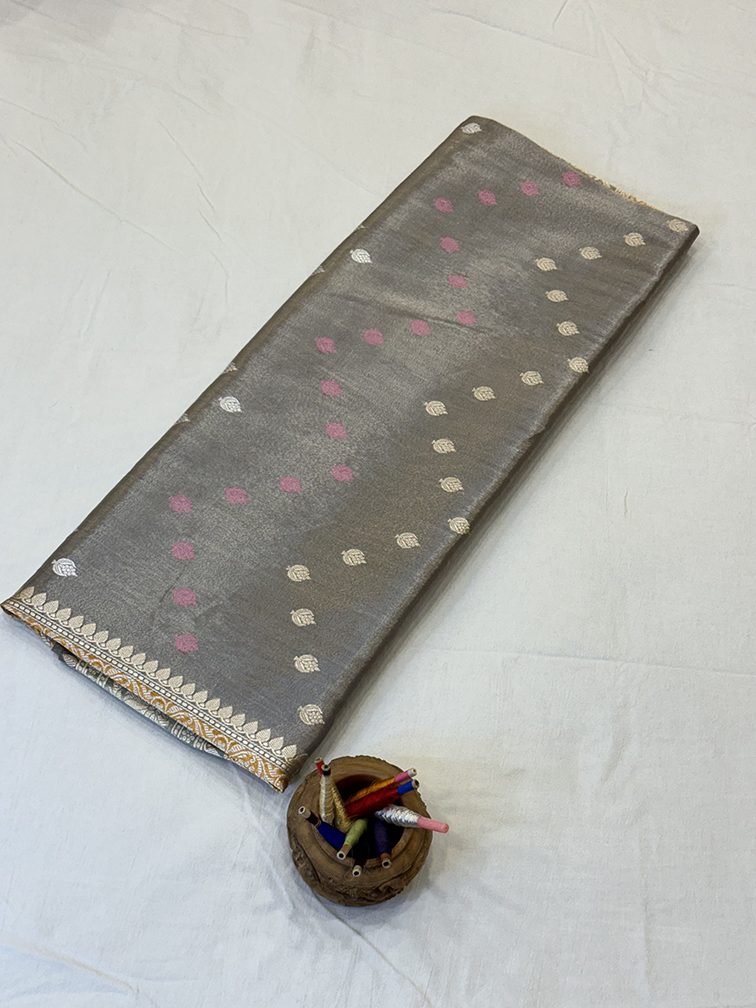
Grey Tissue Silk Saree — Kadwa Booti
Featherlight tissue silk in dove grey, with hand-placed Kadwa booti motifs and a metallic sheen that catches the light on the drape.
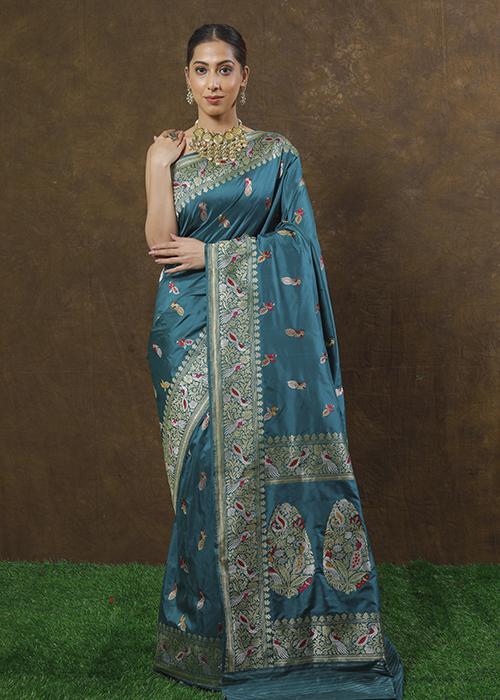
Peacock Katan Silk Saree — Kadwa Bird Booti
A rich peacock-blue Katan base woven with hand-placed bird booti motifs in real zari — structured body, firm pleats, heirloom quality.
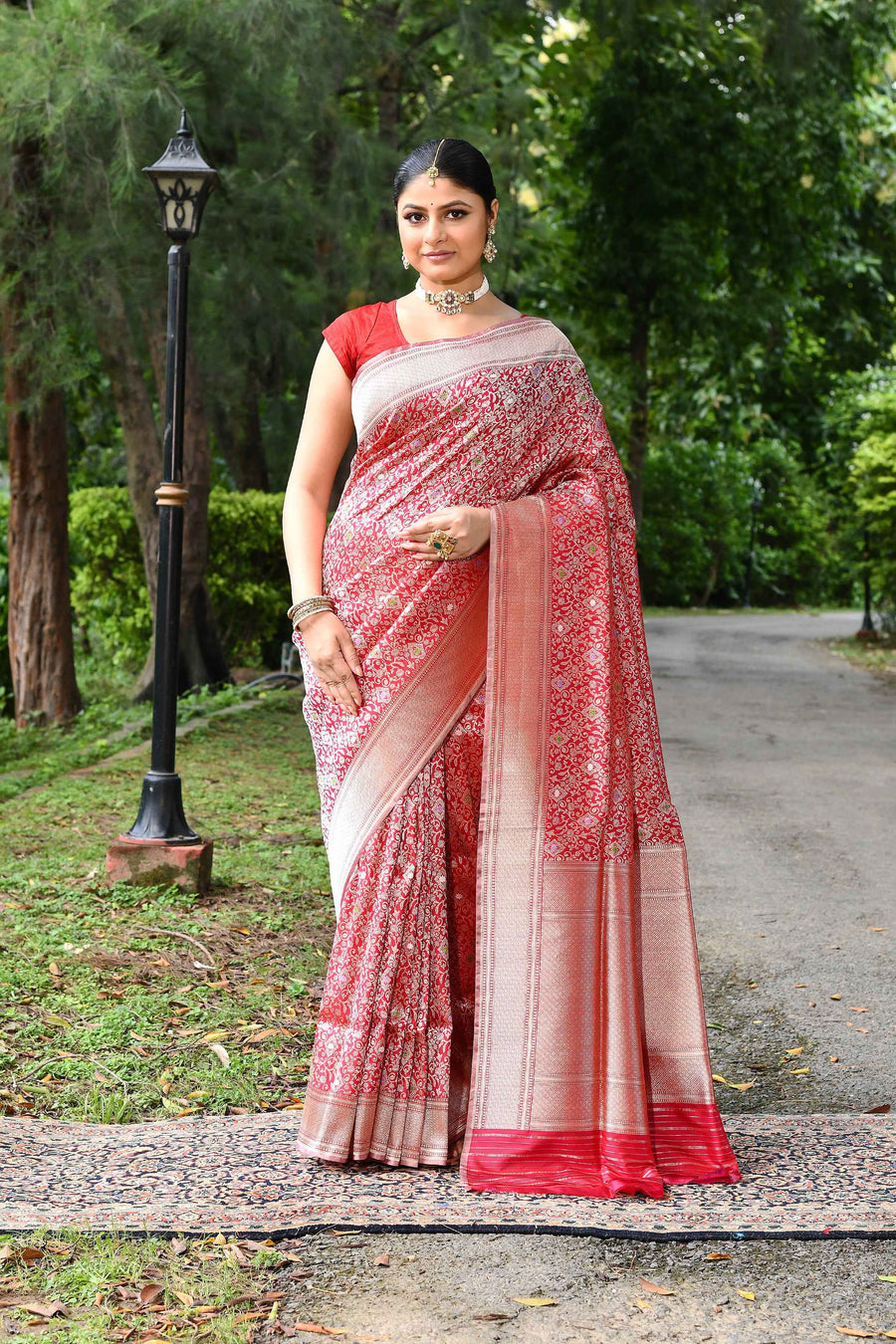
Red Katan Silk Saree — Kadwa Jaal
The classic bridal red, woven in a dense Kadwa jaal lattice with gold zari — the most requested colourway for Varanasi weddings.
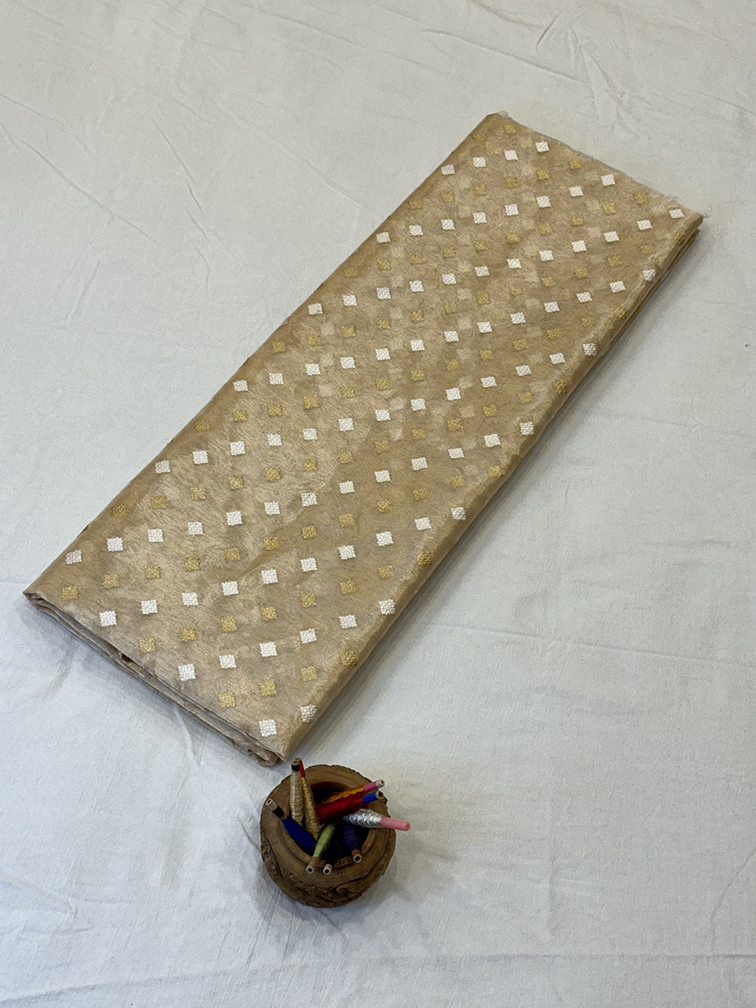
Golden Tissue Silk Saree — Kadwa Booti
An all-gold tissue base that floats rather than falls — airy, papery-light and covered edge to edge in fine booti work.
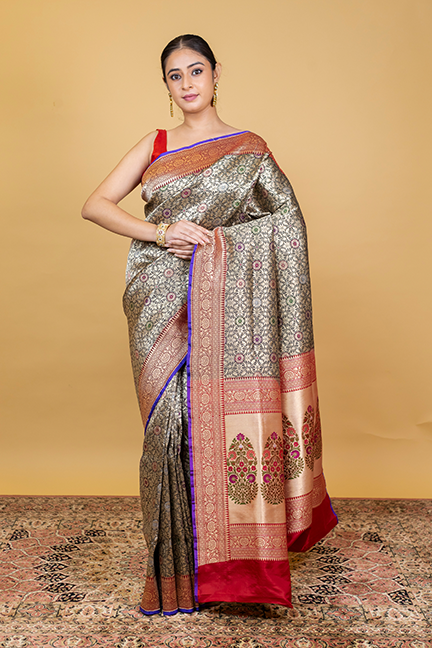
Black Katan Silk Saree — Tanchui Booti
Deep black Katan silk with the Tanchoi weaving technique, giving a subtle self-tone booti texture that reads as pure understated elegance.
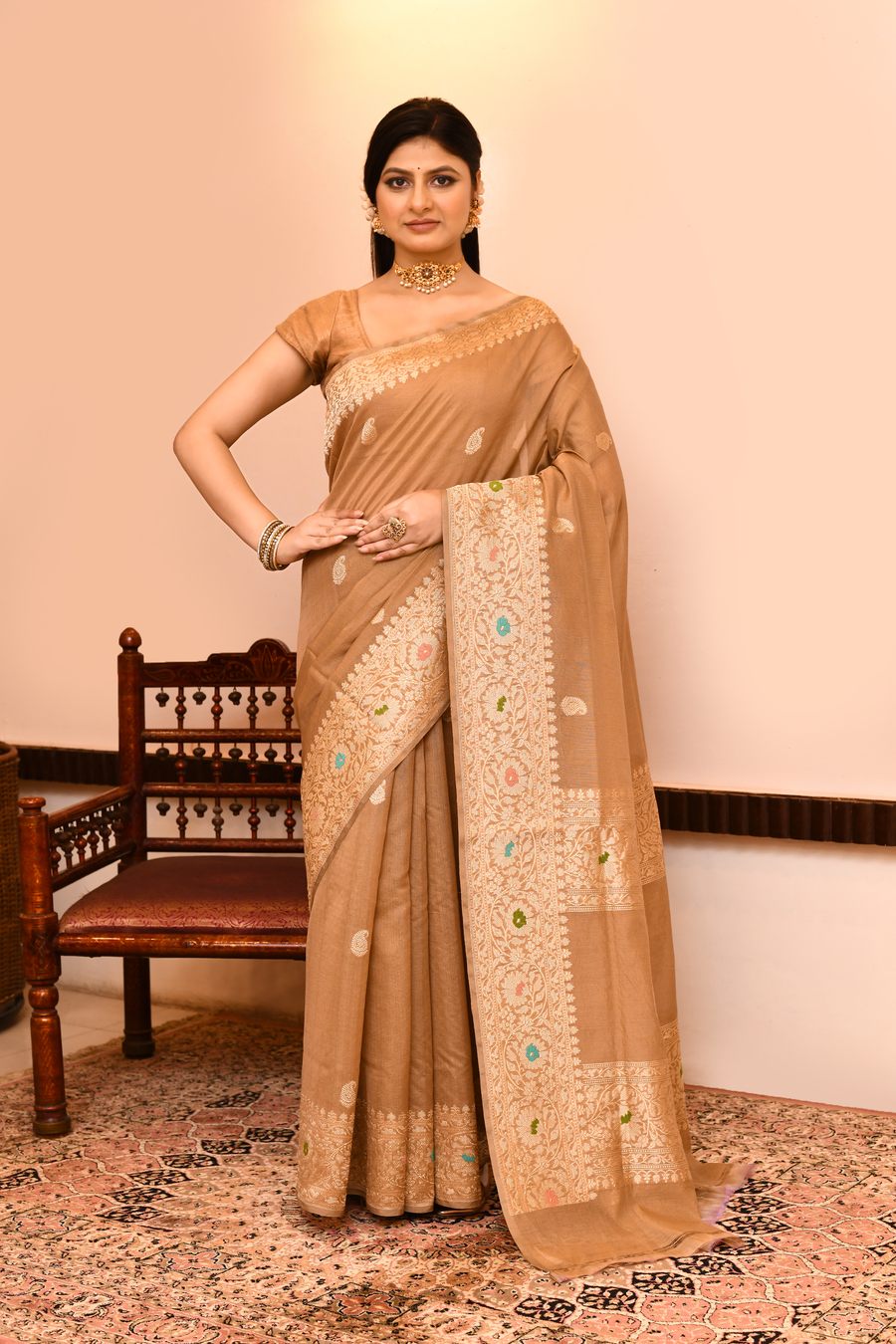
Off-White Kora Silk Saree — Kadwa Booti
Sheer, crisp Kora silk in soft off-white, hand-woven with scattered booti work — light enough for daytime functions and summer events.
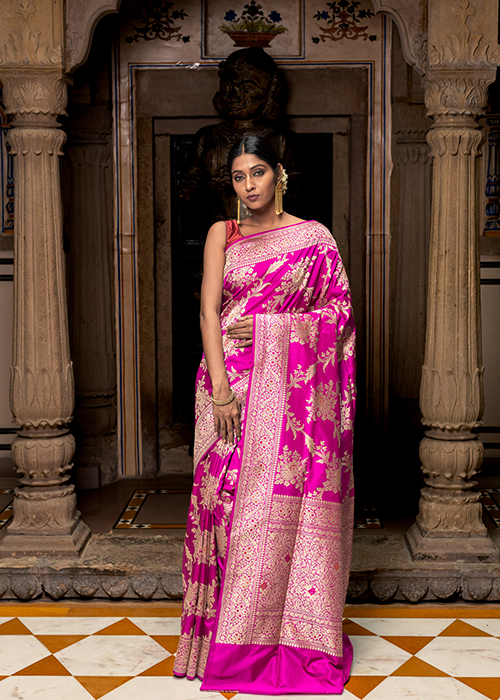
Magenta Katan Silk Saree — Meena Jaal
Vibrant magenta Katan silk with a multicolour Meena jaal woven through the zari — festive, rich, and built to last generations.
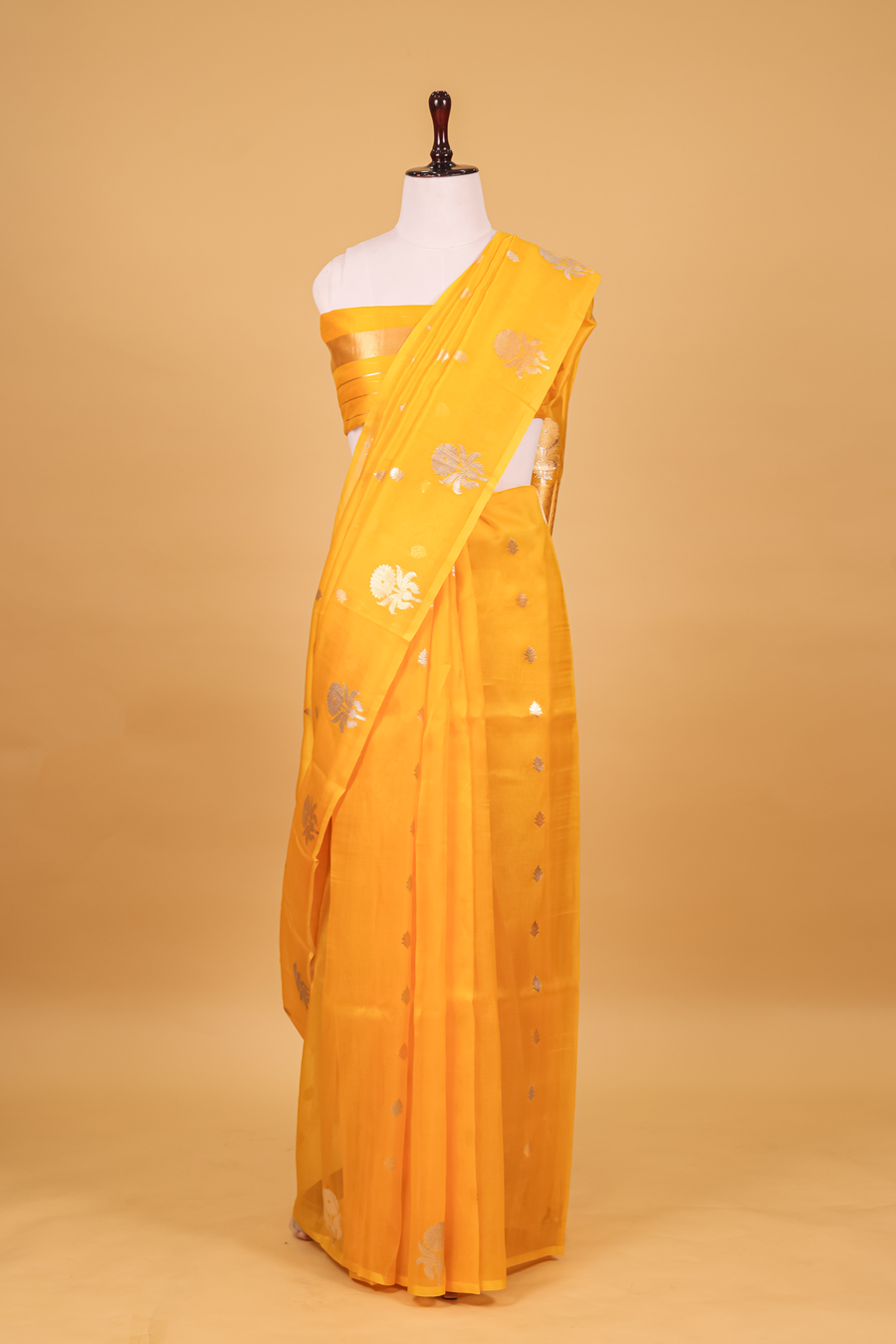
Yellow Organza Silk Saree — Kadwa Boota
Crisp, sheer organza in sunny yellow that holds its shape beautifully — the lightest saree in our collection, ideal for summer celebrations.
What Buyers Say About Our Weave
"The zari work looked far richer in person than in the photos. You can tell instantly it's handloom, not a printed copy."
"I asked a local weaver to check the saree before I trusted it. He confirmed it was genuine Banarasi — the GI certification matched."
"Bridal-level finishing, and it arrived exactly on schedule. This is clearly a real manufacturer, not just a reseller."
Banarasi Saree Manufacturing — FAQs
Is The Panaya an actual Banarasi saree manufacturer, or a reseller?
The Panaya is the retail brand of Kamalya Textiles, a manufacturing house working directly with karigar families across Varanasi's weaving lanes — Lallapura, Madanpura, Alaipura and Jaitpura. We are not buying finished stock from a wholesale market and reselling it.
What silk types do you manufacture?
We manufacture pure Katan silk, Kora silk, Georgette silk, Organza silk and Tissue silk Banarasi sarees, along with Black and White Banarasi sarees for specific occasions.
How do I know the GI certification is genuine?
Every Panaya saree can be verified against a real GI registration number — not a printed sticker. You're welcome to ask us to walk you through the verification over a WhatsApp video call before you buy.
How long does it take to manufacture one saree?
A genuine handwoven Banarasi saree takes anywhere from 15 days to 3 months, depending on the complexity of the zari work and the silk type.
Do you ship Banarasi sarees across India?
Yes, we ship pan-India directly from our Varanasi workshop, including to Delhi NCR, Mumbai, Bengaluru, Kolkata, Hyderabad, Chennai, Pune, Jaipur, Chandigarh and Ahmedabad.