
Banarasi
Work Saree
In the Banarasi trade, "work" is the word weavers use for the technique itself — how the zari is set, how the motif is built, how many hands touch the loom before a saree is finished. It's the real reason two sarees that look similar in a photo can be worlds apart in hand and price.
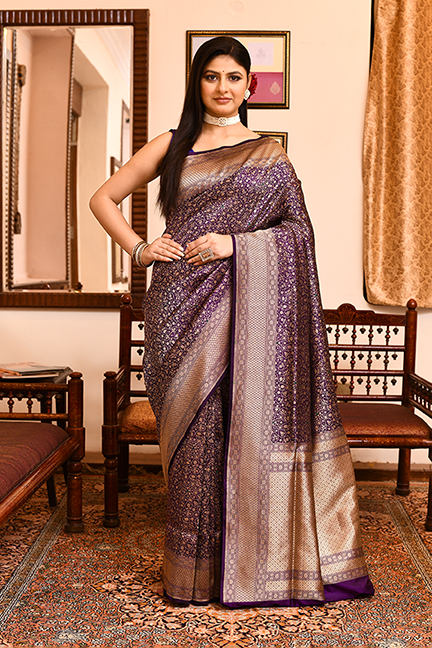
What weavers actually mean by "work"
Walk into a weaving workshop in Varanasi and ask about a saree, and the first question you'll get back is: "kaunsa kaam hai?" — which work is it? The answer isn't the colour or the price. It's the specific technique used to build the pattern into the fabric.
Every technique changes three things — how long the saree takes to weave, how it feels on the back of the fabric, and how it holds up over years of wear. That's why "Banarasi work saree" is really a question about method, not just appearance.

The main types of Banarasi work, explained
These are the techniques you'll actually hear used by weavers and sellers — worth knowing before you buy.
Each motif is woven separately using small spools of zari, locked into place by hand, one at a time. No loose thread carries across the back of the fabric. It's the slowest technique and generally considered the finest — a Kadwa saree can take a single weaver over a month.
Extra threads are cut away after weaving to leave a clean, slightly raised pattern with an embossed feel. Faster than Kadwa, and gives the fabric a distinct textured surface you can actually feel with your fingers.
A technique borrowed from Chinese silk weaving generations ago, producing a smooth, fine pattern using coloured silk threads rather than zari — subtler and flatter than most Banarasi work, often used for smaller repeating motifs.
An intricate, densely packed floral and vine pattern, one of the oldest documented Banarasi styles. Jangla pieces typically use multiple thread colours alongside zari, making them some of the most labour-intensive to weave.
The base fabric is covered edge to edge with small, regularly repeating motifs (butis) rather than one large design — a dense, all-over pattern that reads almost like a printed texture, but entirely handwoven.
Coloured silk or enamel-style thread is woven alongside gold or silver zari, outlining each motif in a second colour. This is what gives certain sarees that jewel-like, multi-tone glint rather than a single flat gold sheen.
How "the work" actually gets made
Every technique above happens somewhere inside this five-stage process.
Naqsha (Design)
The pattern is first plotted on graph paper by a designer, translating the motif into a weavable structure.
Warping
Silk yarn is stretched across the loom frame in long parallel threads, setting up the base for weaving to begin.
Loom Setup
For Jacquard or Jala looms, punch cards or a harness system are configured to guide the specific pattern being woven.
The Weave
The weaver works the shuttle by hand, throwing zari and silk threads through in the chosen technique — Kadwa, Cutwork, or otherwise.
Finishing
The completed fabric is trimmed, checked for consistency, and finished at the border and pallu before it becomes a saree.
How the type of work affects what you pay
Price in Banarasi weaving tracks labour hours and material almost directly — here's roughly how that plays out.
Entry Tier
Lighter WeavesGeorgette or Kora silk bases with lighter zari work — real handloom, but less dense pattern coverage and fewer weaving hours involved.
Mid Tier
Katan, Booti & CutworkPure Katan silk becomes the base fabric. Kadwa booti or Cutwork brocade patterns sit here — real craftsmanship without maximum zari density.
Top Tier
Full Jaal & Dense KadwaHeavily worked Katan or Tissue silk with a full Kadwa Jaal or Sikargha pattern — the most weaving hours, the densest zari, and the highest price per saree.
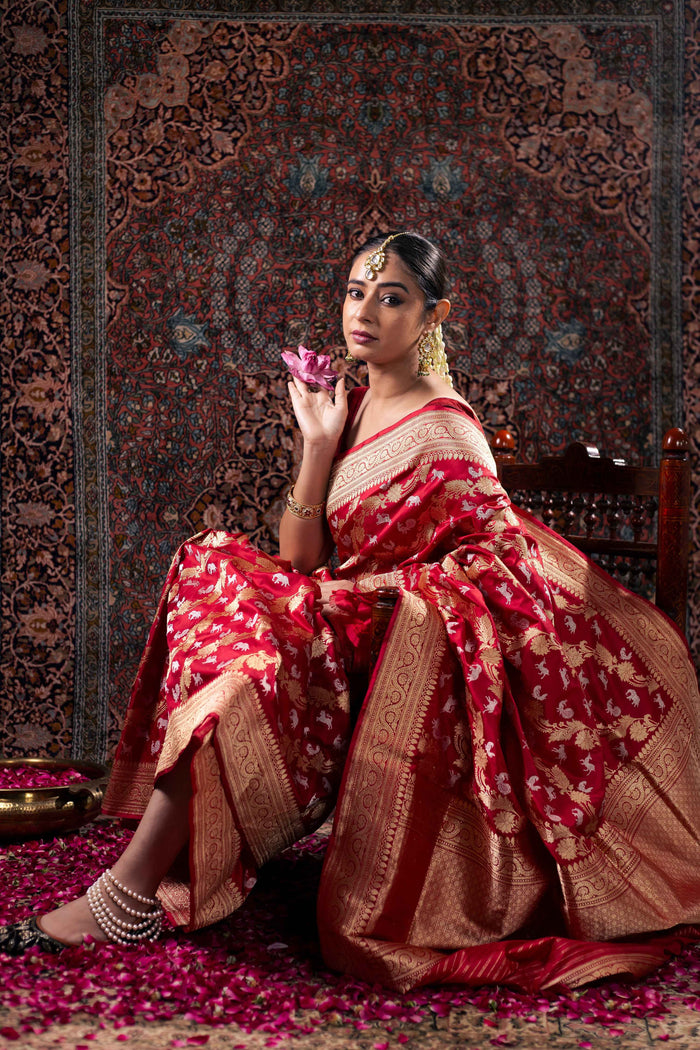
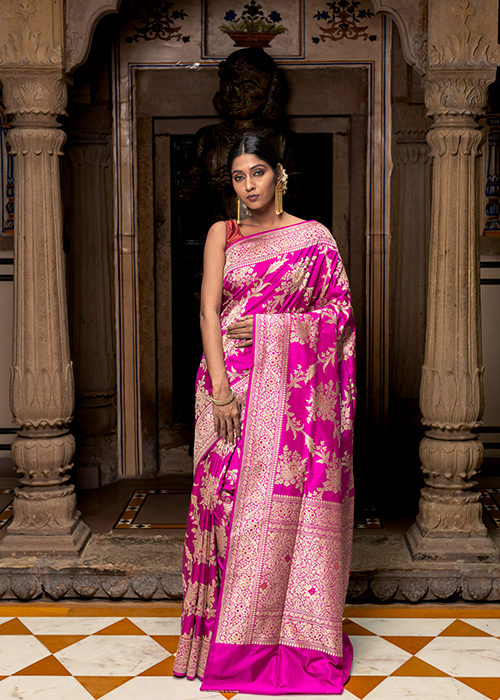
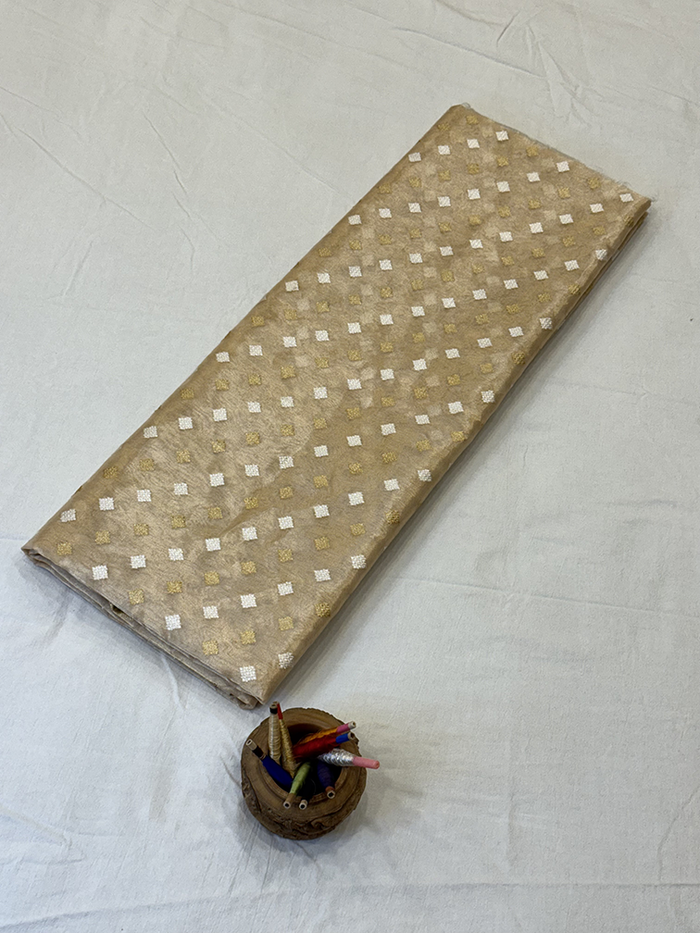
Real Banarasi Work, Across Techniques
A cross-section of our collection, chosen specifically to show the range of techniques described above.


How much "work" do you actually need?
More work isn't automatically better for every occasion — here's how to think about it.
Match It To The Event
A full Jaal Kadwa piece suits a wedding day; a lighter Booti or Cutwork saree is often the better, more comfortable choice for family functions or festivals.
Consider How Long You'll Wear It
Denser work generally means a heavier, warmer saree — worth factoring in if you'll be wearing it for many hours at a stretch.
Think About Reuse
Lighter Booti or Tanchoi work tends to be more versatile across occasions than a heavily worked bridal piece, which is often kept for one specific event.
What buyers usually ask about Banarasi work
Is Kadwa work always better than other techniques?
It's generally considered the finest because of how cleanly it finishes, but "better" depends on what you're looking for — Cutwork gives a distinct texture, and Tanchoi gives a subtler, flatter finish that suits different styling needs.
How can I tell which technique a saree actually uses?
Check the back of the fabric. Kadwa work looks clean with minimal loose thread; other techniques may show more thread carrying across the reverse. A genuine seller should also be able to name the technique directly.
Does more "work" always mean a higher price?
Almost always, yes — denser patterns and techniques like Kadwa and Jangla take significantly longer to weave, and that labour time is the biggest driver of price in genuine handloom Banarasi sarees.
Can two sarees with the same motif have different work?
Yes. A paisley or floral motif can be executed as Kadwa, Cutwork, or even printed to imitate the look — which is exactly why asking about the technique matters more than just looking at the pattern.
Ready to see the work up close?
Browse our full range of Banarasi sarees, across every technique described above, handwoven in Varanasi.