
Navratri
Sarees
Most Navratri saree pages show you a product grid and call it done. This one starts with the actual nine-day colour calendar people search for every year, then gets into what a saree needs to survive an actual night of garba — not just look good standing still.
Navratri's 9-day colour guide
This sequence is followed widely across India, especially in Gujarat and Maharashtra, though the exact colour-to-day pairing can shift slightly by region and year.
Grey / Orange
Shailaputri — the festival's opening day.
White
Brahmacharini — purity and simplicity.
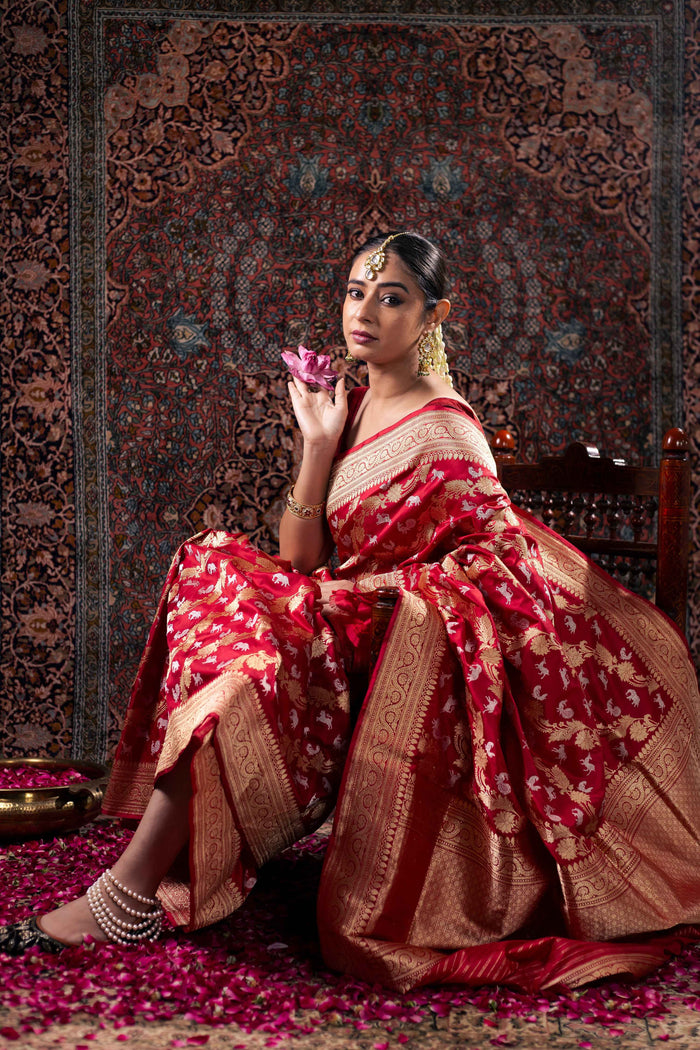
Red
Chandraghanta — courage and passion.
Royal Blue
Kushmanda — richness and calm.
Yellow
Skandamata — brightness and joy.
Green
Katyayani — new beginnings and growth.
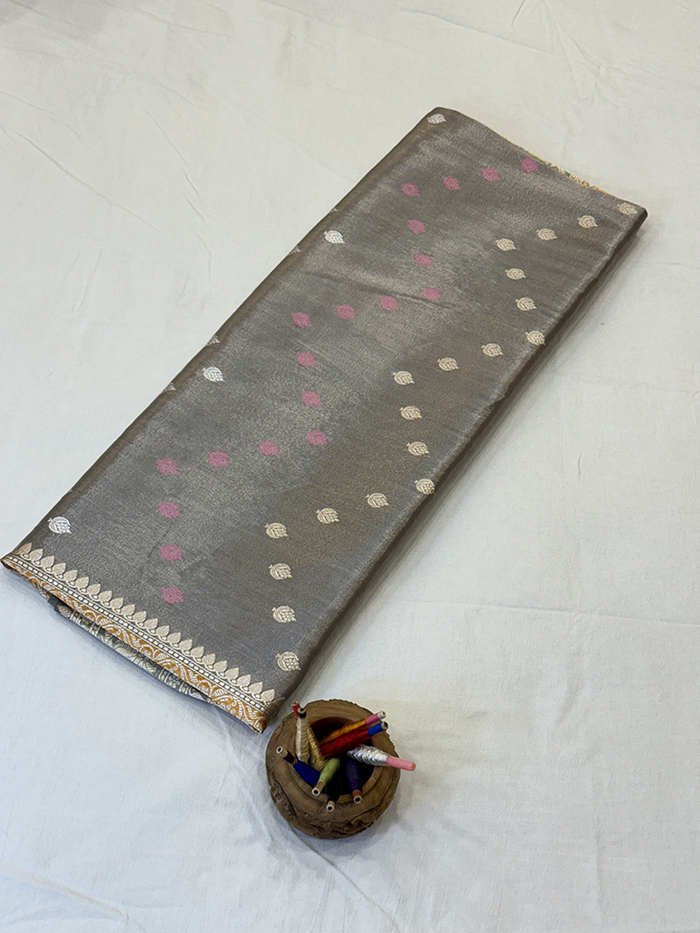
Grey
Kalaratri — transformation and balance.
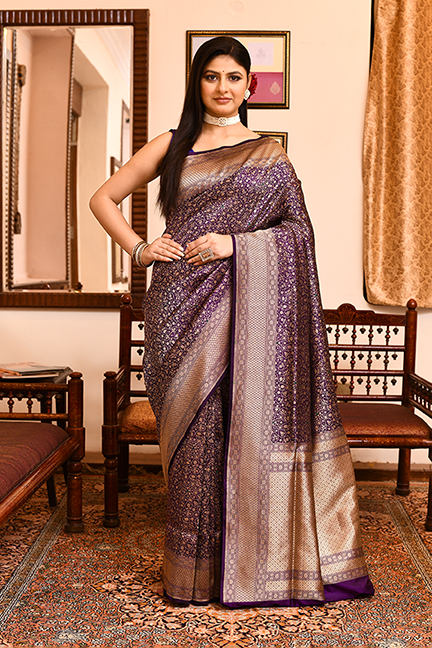
Purple
Mahagauri — ambition and power.
Peacock Green
Siddhidatri — the final day's fulfilment.
Treat this as a well-known tradition to draw from, not a strict rulebook — plenty of people wear whichever colour they already love, every single night.
Not every night calls for the same saree
Nine nights of standing, dancing, and travelling between pandals adds up — plan the weight of your outfit accordingly.
Early Nights, Lighter Pieces
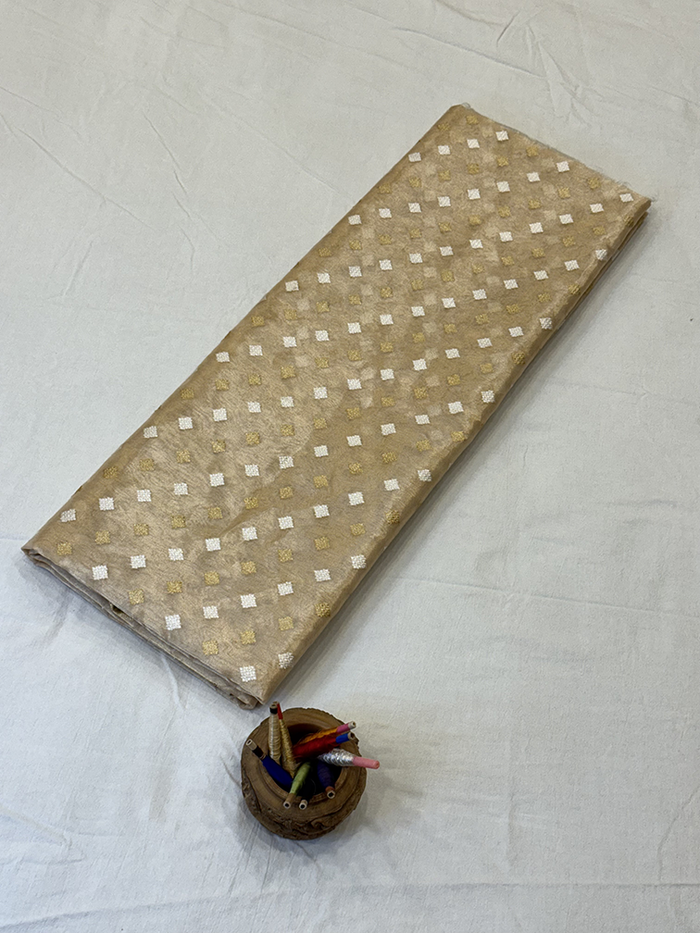
A Kadwa booti or Cutwork saree suits the opening nights, when energy is high and you're likely dancing for hours at a stretch.
Ashtami & Navami, Your Best Pieces
These two nights carry the most ritual significance for many — a good place to bring out a fuller Jaal piece with denser zari work.
Plan For Repeats
Few people own nine different outfits — repeating two or three pieces across the nine nights, in rotation with the colour calendar, is completely normal.
Navratri-Ready Banarasi Silk Sarees
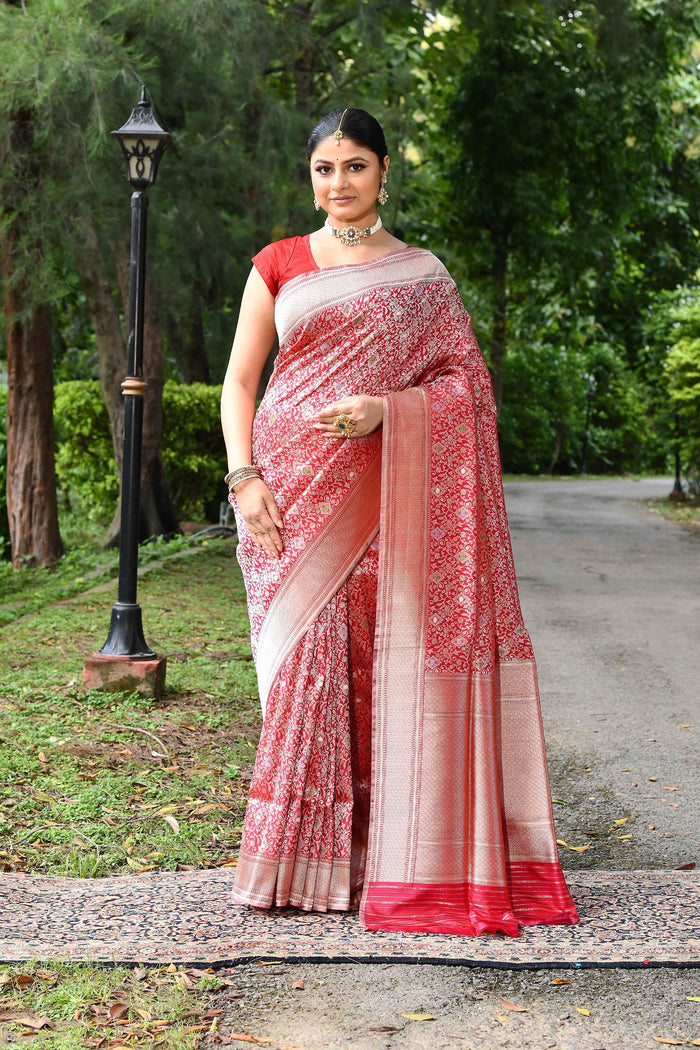
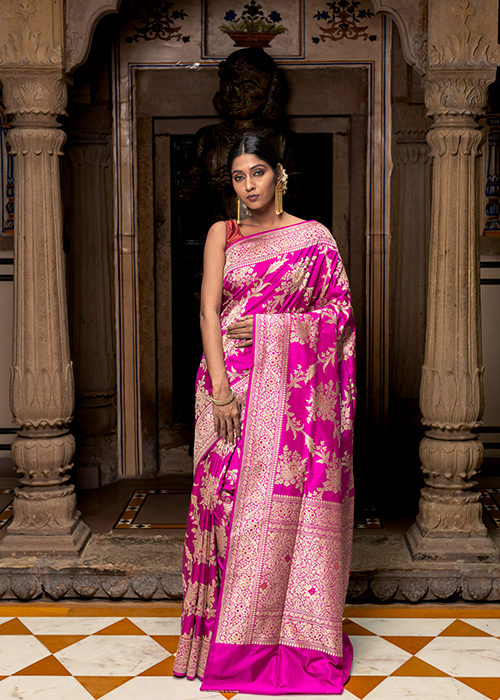
Real sarees from our Varanasi looms, matched loosely to the colour calendar above — red, purple, gold, and jewel tones.
What a saree needs to survive a real garba night
Chaniya choli gets most of the attention for dandiya, but plenty of women — especially mothers and older family members — dance the full night in a saree. Here's what actually holds up.
Pre-Pleat & Pin, Always
Garba involves constant spins and footwork — pin the pallu at the shoulder and once more at the waist before you start, not partway through.
Katan Over Flowy Fabrics
A structured Katan drape holds its shape through repeated turns far better than a looser, flowier fabric that can slip out of place mid-dance.
Dense Zari Photographs Better
Garba nights are usually lit with coloured lights, not steady warm light — a fuller Jaal or Meena Jaal pattern reflects more of that light than a lighter booti weave.
What buyers usually ask about Navratri sarees
Do I have to follow the 9-colour calendar exactly?
No — it's a well-known tradition many people enjoy following, but far from mandatory. Wearing your favourite colours across the nine nights is just as common.
Is a Banarasi silk saree practical for dancing garba?
Yes, especially Katan silk — its structured drape holds pleats through movement better than many people expect, provided the pallu is pinned securely beforehand.
How many sarees do I actually need for nine nights?
Most people rotate two or three pieces across the full festival rather than buying nine separate outfits — pairing colours loosely with the calendar where it's convenient.
How far in advance should I order for Navratri?
Since it's a peak festival period, order at least three to four weeks ahead for made-to-order pieces to avoid last-minute availability issues.
Ready to find your Navratri sarees?
See the full range of festive Banarasi sarees, across every colour on the calendar and beyond, woven in Varanasi.