
Soft
Banarasi Saree
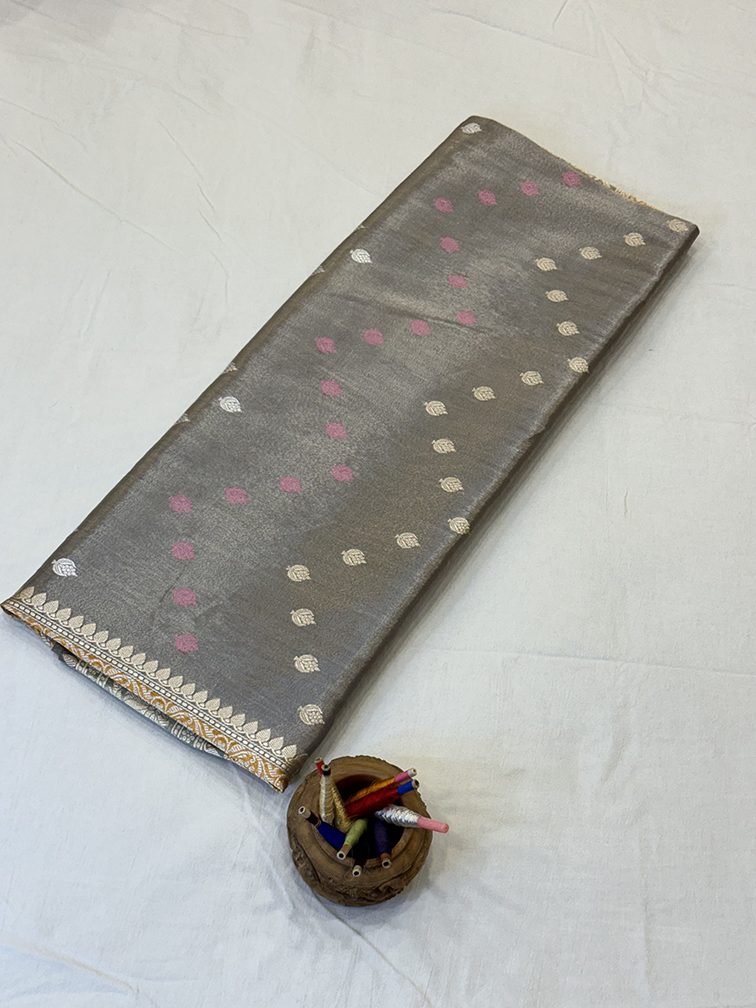
Not every Banarasi saree needs to be stiff and structured. Woven in Tissue silk, these pieces keep the same real zari and handloom craft, but drape lighter, move more freely, and feel gentler against the skin.
What "soft" actually means in Banarasi weaving
It's easy to assume "soft" means less authentic. In genuine Banarasi weaving, it just means a different silk yarn — not a shortcut.
A Different Yarn, Not A Different Craft
Tissue silk swaps Katan's tightly twisted yarn for a finer, more fluid thread — the hand weaving, real zari, and Kadwa technique underneath stay exactly the same.
Lighter On The Body
A Tissue silk saree typically weighs less than an equivalent Katan piece, which makes a real difference over a long day of standing, sitting, and moving around.
A Different Kind Of Shine
Where Katan has a structured, golden sheen, Tissue silk has a softer, almost luminous glow — the zari sits on a more translucent base, so it catches light differently.
Where Tissue silk sits on the weight scale
If you've only worn Katan silk before, here's roughly how Tissue compares to the other Banarasi weaves.
Crisp and firm, with real body. Holds pleats well but sits noticeably heavier by the end of a long event.
Thin, glowing, and soft against the skin. Moves with you rather than holding a fixed shape — the lightest true silk weave in Banarasi weaving.
A gentle crinkle texture with a close, body-hugging drape — softer than Katan, with a bit more grip than Tissue.
Light like Tissue but with more structure and a subtle stiffness — often layered or paired with contrast fabric underneath.
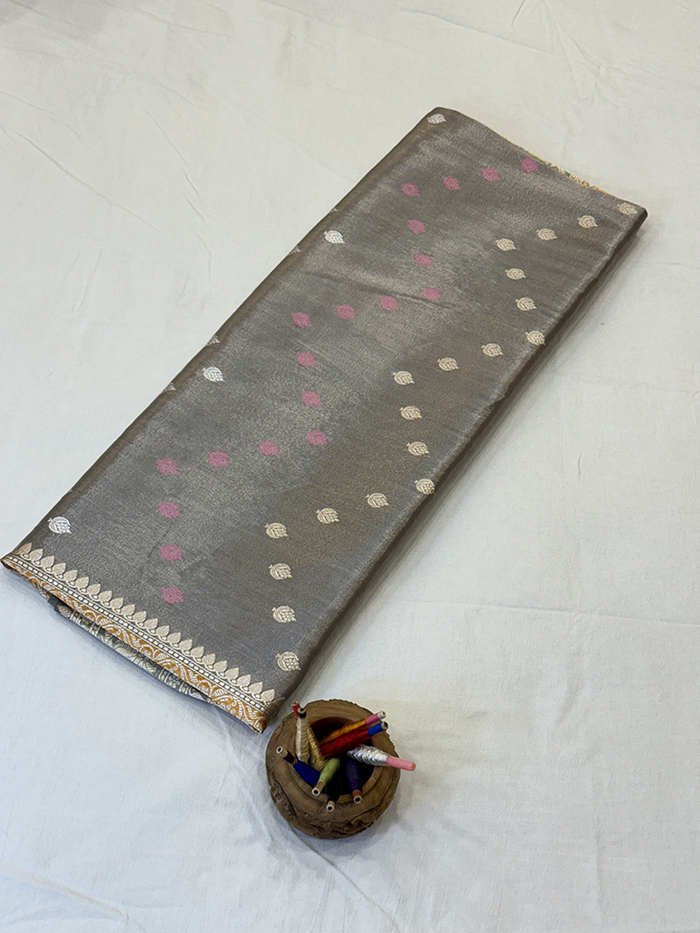
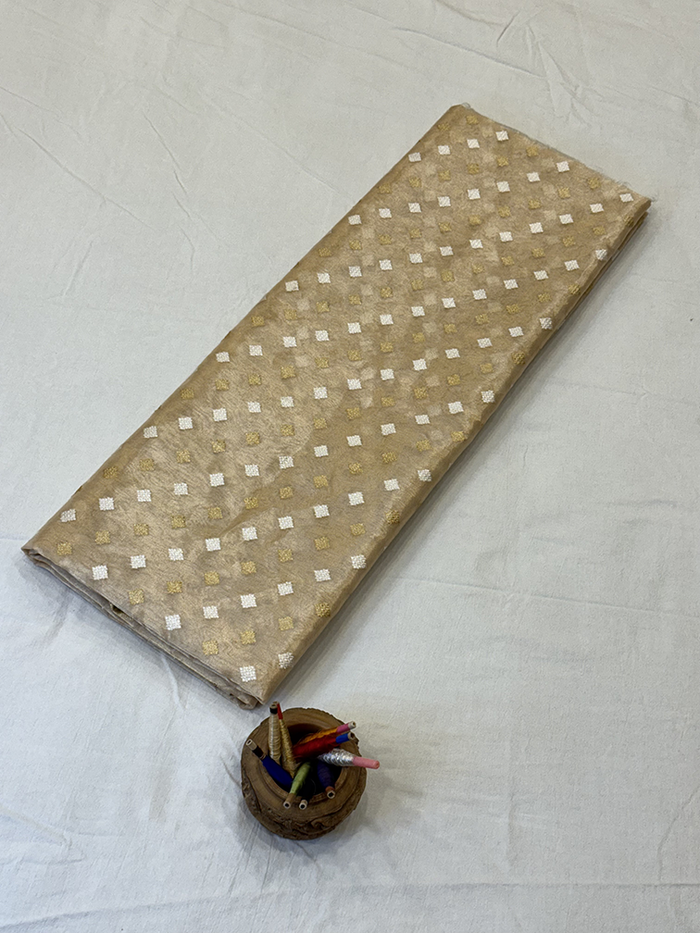
Soft, Lightweight Banarasi Sarees In Tissue Silk
Real sarees from our Varanasi looms — same handloom craft and real zari as our Katan pieces, in a lighter, more fluid fabric.


Who tends to prefer a soft Banarasi saree
Not everyone needs a Katan silk saree — here's when Tissue makes more sense instead.
Long Events, All Day
If you'll be on your feet or seated for hours at a stretch, the lighter weight of Tissue silk is noticeably easier to wear than a heavier Katan piece.
First-Time Saree Wearers
Tissue silk's fluid drape is more forgiving to pleat and manage than a stiffer fabric, which makes it a gentler starting point if you're new to sarees.
Warm-Weather Functions
A lighter fabric breathes better in heat, which is why many buyers choose Tissue silk over Katan for daytime or outdoor summer events.
What buyers usually ask about soft Banarasi sarees
Is a soft Tissue silk saree less durable than Katan?
Not in terms of the weave itself — both use genuine mulberry silk and real zari. Tissue is simply a finer, thinner yarn, so it needs slightly gentler handling during storage and dry cleaning, but with proper care it lasts just as long.
Can a Tissue silk saree be worn for a wedding, or is it too light?
Yes — many bridal pieces are made in Tissue silk, especially with dense Kadwa Jaal zari work. The lighter base fabric doesn't limit how much zari or how formal the pattern can be.
Is Tissue silk harder to drape than Katan?
It's more fluid, which some first-time wearers find easier to manage, though it holds pleats slightly less firmly than Katan's structured body. A few safety pins at the waist and shoulder solve this easily.
Does a lighter fabric mean less zari work?
Not necessarily. As you can see above, our Onion Pink and Red pieces both carry a full Kadwa Jaal pattern — the density of zari work is a separate choice from the base fabric weight.
Ready to find your soft Banarasi saree?
See the full range of lightweight Tissue silk sarees, along with every other weave woven in Varanasi.