
01
Avoid The Bride's Likely Colour
If you know or can guess the bride's outfit colour for a specific function, steer clear of it — being mistaken for her, even briefly in photos, is the one thing every guest wants to avoid.
Shopping for a wedding you're attending, not hosting, is its own kind of decision — you want to look genuinely well-dressed without ever being mistaken for the bride's colour, and you want something you can actually wear again next wedding season.
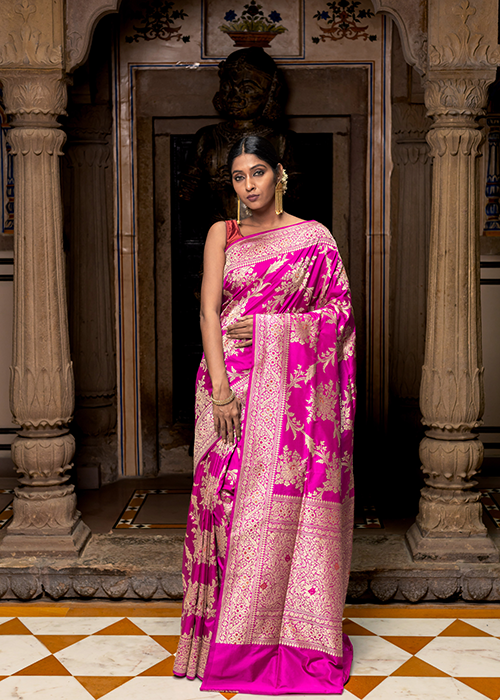
Nobody tells you this until you've already made the mistake once — so here it is upfront.
If you know or can guess the bride's outfit colour for a specific function, steer clear of it — being mistaken for her, even briefly in photos, is the one thing every guest wants to avoid.
In most Indian wedding contexts, plain white or cream carries associations that make it a less common guest choice — jewel tones and rich colours read as more appropriate.
A well-worked Katan silk with real zari already reads as put-together — you don't need the single most elaborate outfit at the event to look genuinely dressed for it.
India's main wedding season runs roughly November through February, and most guests attend several weddings in that window — not just one. That changes the maths on what's actually worth buying.

Different functions call for different weights, even when you're not the bride.
A lighter Kadwa booti weave in a bright, festive colour works well — comfortable for sitting and moving through a more casual, daytime event.
A jewel-tone piece with denser zari holds up well under stage lighting without needing to be as heavy as a bridal-grade saree.
A rich, formal Katan silk in a colour distinct from the bride's is the safest, most appropriate choice for the main ceremony itself.
Your most elegant piece for the season works here — deep jewel tones photograph well and read as appropriately dressed-up without competing with the couple.
Real sarees from our Varanasi looms, in jewel tones built to be worn again and again across a full wedding season.
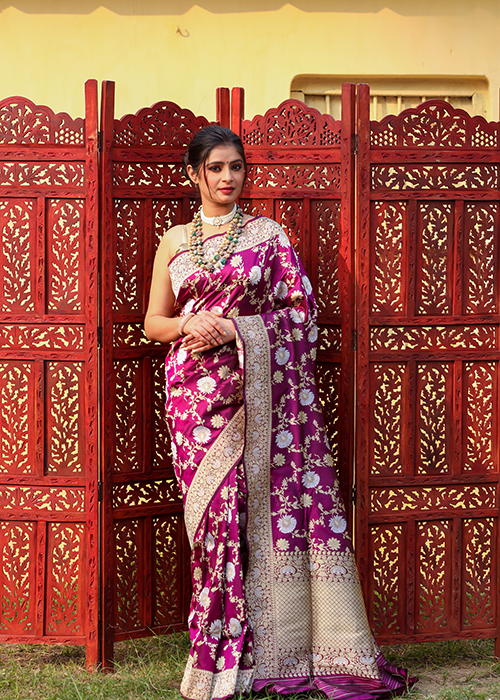
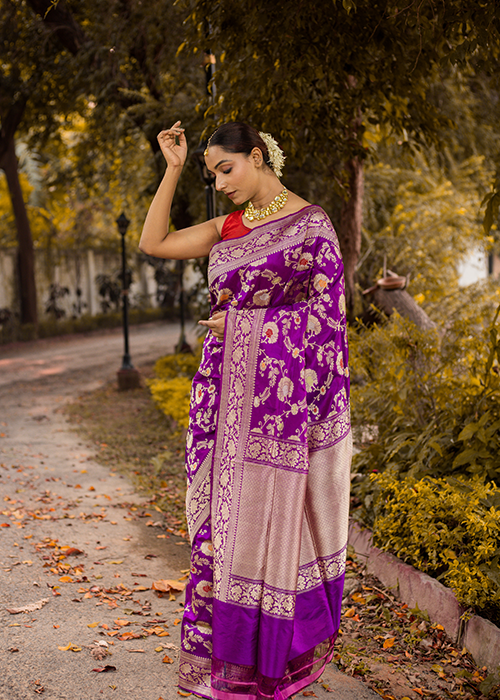
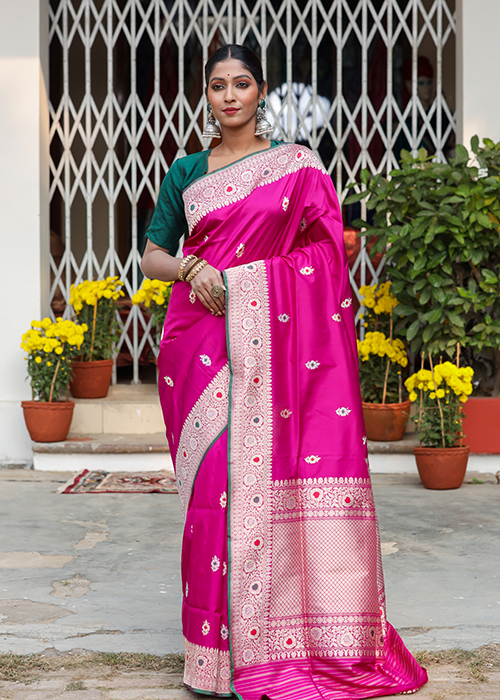
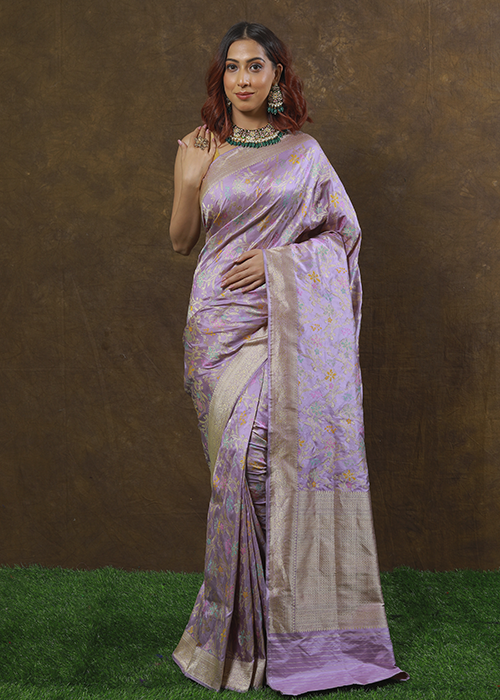
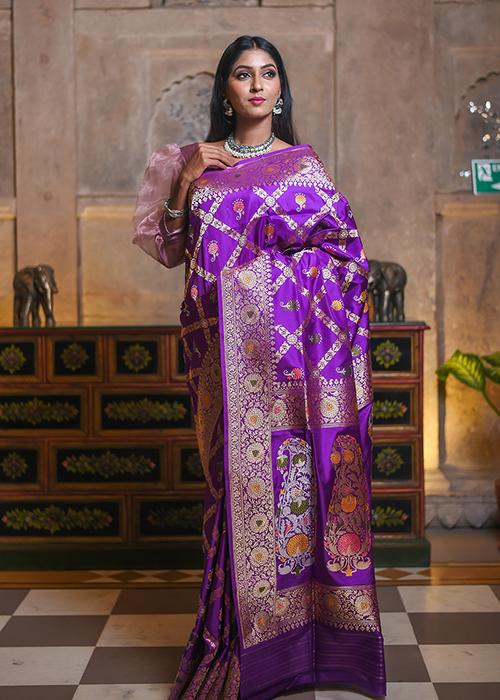
Avoid whatever colour the bride is known to be wearing for that specific function, and be cautious with plain white or cream, which carries different associations in many Indian wedding contexts.
Yes, and most people do — as long as the weddings involve different guest groups, repeating a well-loved piece across a season is completely normal.
It depends on the specific wedding and region, but many guests avoid red regardless, simply because it's the most traditional bridal colour and easiest colour to be mistaken for the bride in.
A mid-weight Katan silk in a jewel tone with a Meena Jaal or Kadwa booti pattern is usually flexible enough to move between a daytime function and an evening reception without looking out of place at either.
See the full range of jewel-tone Banarasi sarees, along with every other shade woven in Varanasi.