
Durga Puja
Sarees
Durga Puja isn't one outfit — it's five days of pandal hopping, an Ashtami morning anjali with folded hands, a dhunuchi naach that demands real movement, and a Dashami sindoor khela that ends the festival in a blur of red. Most saree pages show you a colour grid. This one walks through the actual days.

The laal-paar shada tradition, and what we actually stock
The classic Bengali Durga Puja look is a white saree with a red border — laal-paar shada — traditionally in cotton or tant, worn especially for the Ashtami anjali. It's a distinct look from a Banarasi silk piece, and if that's specifically what you want, it's worth sourcing from a Bengal handloom specialist.
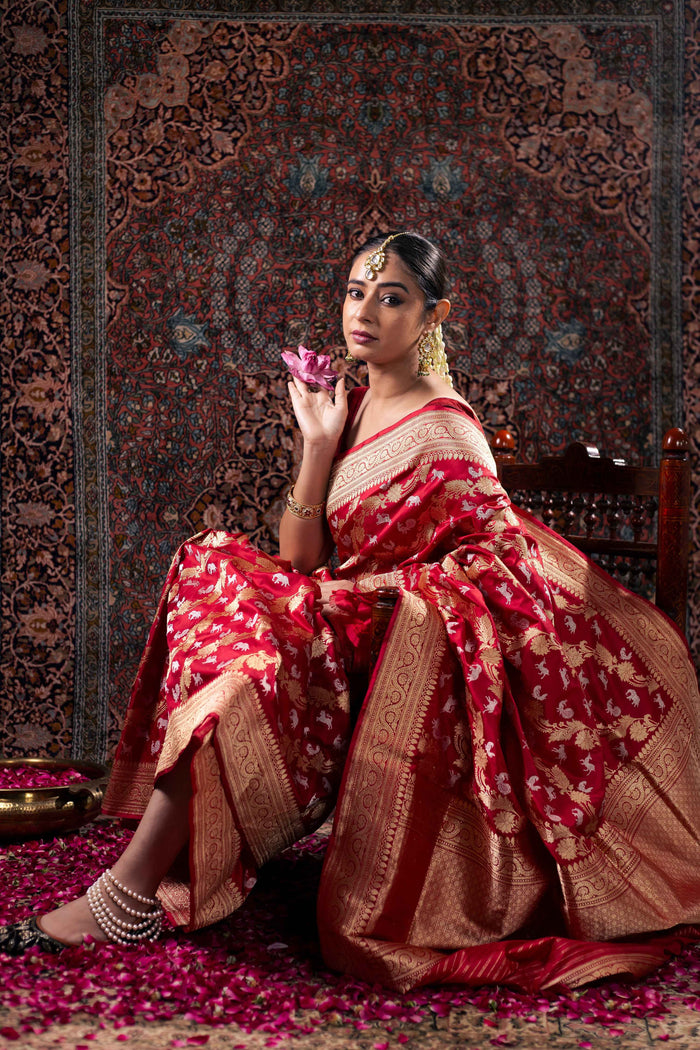
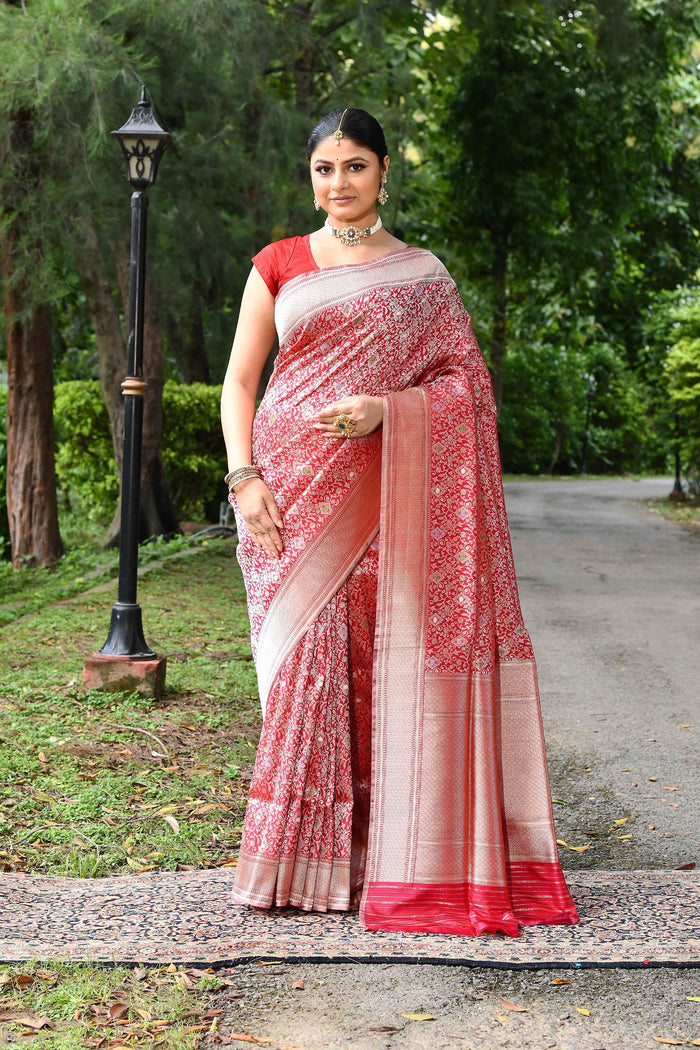
What Banarasi weaving brings to Durga Puja instead is richness for the evening pandal-hopping, the family gatherings, and Navami-Dashami — deep reds, maroons, and golds with real zari that hold up beautifully under pandal lighting and evening photographs. Our collection below is built for that half of the festival.

A saree for each day of the puja
If you're attending pandal hopping across all five days, here's a practical way to plan your outfits.
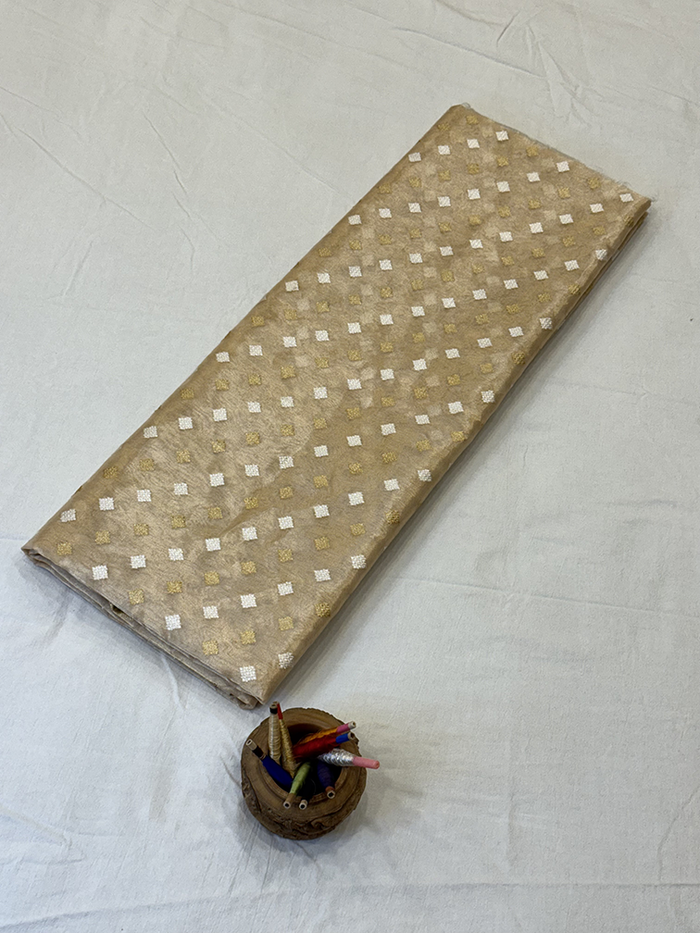
A lighter Kadwa booti weave suits the early evenings of pandal visits and the opening rituals — festive, but not the heaviest piece in your wardrobe.
A mid-weight Katan or Tissue silk in maroon or gold works well as pandal hopping picks up and evenings get longer.
The most significant morning ritual of the festival — many choose their richest red or gold piece here, alongside the traditional white-and-red for those who follow it.
If you're joining the dhunuchi naach, prioritise a structured, closer drape you can move freely in over the heaviest full Jaal piece — see the note on this below.
A red or maroon saree is traditional for sindoor khela — expect vermillion, so many women deliberately choose a piece they don't mind marking.
Durga Puja-Ready Banarasi Silk Sarees
Real sarees from our Varanasi looms, in the reds, maroons, and golds that carry the festival's five days.



What actually matters when you're dancing with fire and smoke
The dhunuchi naach involves lit incense pots, real movement, and often close quarters with other dancers — worth planning for specifically.
Pin The Pallu Tight
A loose, flowing pallu is a real hazard around a lit dhunuchi — pin it securely at the shoulder and waist before you start.
Choose A Closer Drape
Katan silk's structured, body-hugging fall is safer and easier to move in around open flame and incense than a very loose, flowing lighter fabric.
Keep Distance From Others' Dhunuchis
In a crowded pandal, incense pots move fast in close proximity — stay aware of distance from other dancers, not just your own flame.
Choosing a saree for sindoor khela
The final ritual of the festival is joyful, messy, and worth planning your saree choice around specifically.
Pick A Piece You Won't Mind Marking
Vermillion stains are part of the tradition — many women deliberately wear a red or maroon saree they're happy to see marked, rather than their most prized piece.
Red Hides It, Pale Shades Show It
A red or deep maroon base absorbs sindoor marks far less visibly than a lighter colour — worth factoring in if you want to wear the saree again afterward.
Dry Clean Straight After
Take the saree for a dry clean as soon as possible after the ritual — fresh sindoor is easier to treat than a stain left to set for days.
What buyers usually ask about Durga Puja sarees
Do I need a laal-paar shada saree specifically for Durga Puja?
It's the classic look for the Ashtami anjali in Bengali tradition, but far from mandatory. Many women wear rich red or maroon Banarasi silk instead, especially for the evening pandal-hopping days.
Is a Banarasi silk saree practical for a full day of pandal hopping?
A lighter Kadwa booti weave is genuinely more practical than a dense full Jaal piece if you're walking between multiple pandals — save the heaviest saree for Ashtami or a single evening event.
Will the zari be damaged by sindoor during sindoor khela?
Genuine zari holds up reasonably well, but sindoor is oil-based and can still mark the surrounding silk. Dry clean the saree promptly afterward rather than letting the mark set.
How far in advance should I order for Durga Puja?
Since it's a peak festival period, order at least three to four weeks ahead for made-to-order pieces to avoid last-minute availability issues.
Ready to find your Durga Puja saree?
See the full range of red, maroon, and gold Banarasi sarees, along with every other shade woven in Varanasi.