
Karwa Chauth
Sarees
One day, one saree — worn from the pre-dawn sargi through a full day of fasting to the moment you finally see the moon through a sieve. It needs to feel graceful at every one of those hours, not just look good for the photo.
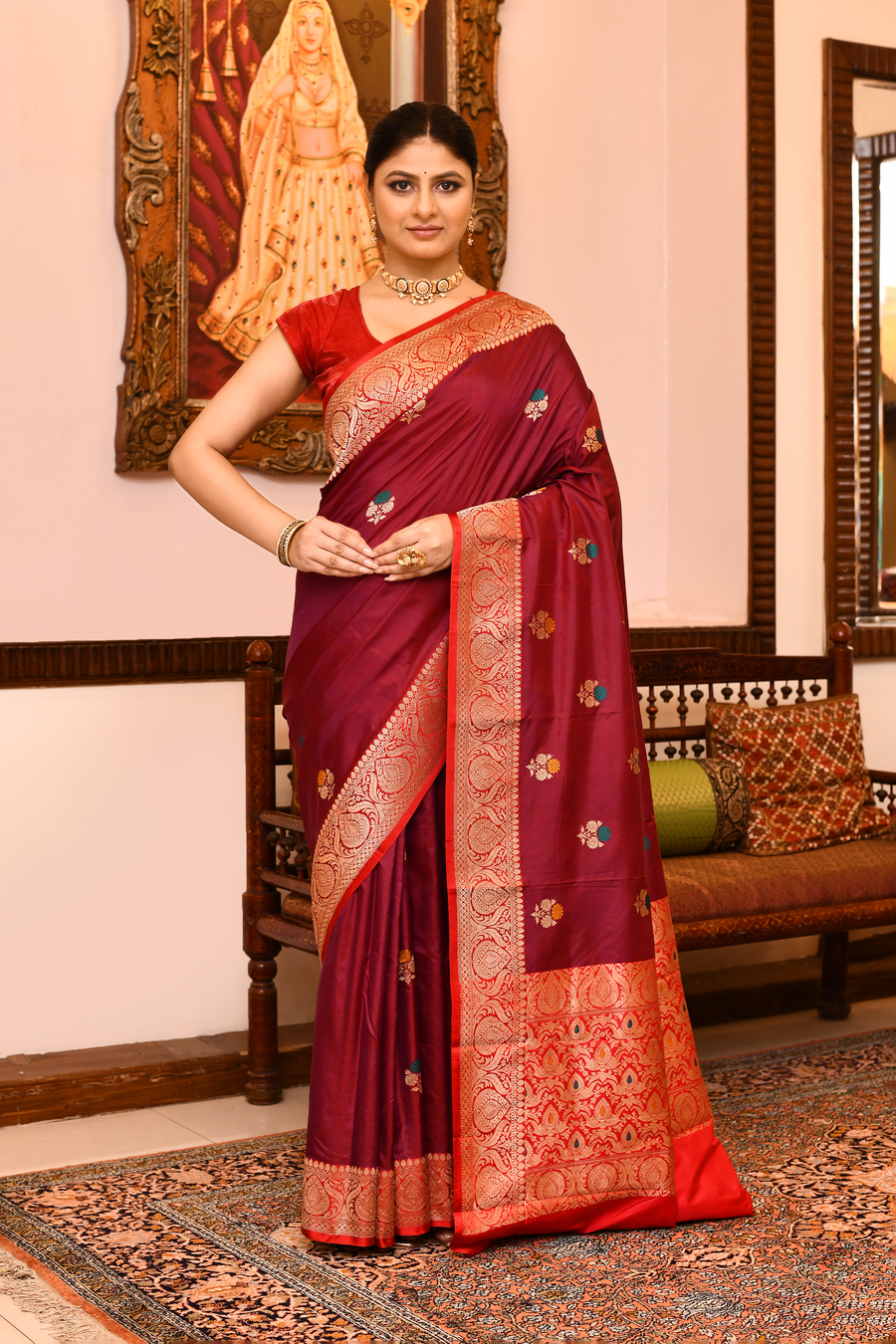
Why red and maroon are the Karwa Chauth colours
In most parts of North India, red and its deeper shades — maroon, wine, rani pink — are considered "suhaag" colours, worn by married women on days tied to their husband's wellbeing. Karwa Chauth sits firmly in that tradition, which is why you'll see it repeated across generations in family photos of the day.
It isn't a strict rule, though. Many women now also choose their wedding-day colour, their mother-in-law's saree, or simply whatever red-family shade they feel most themselves in — the tradition gives you a direction, not a single mandatory shade.

What actually matters on a fasting day
Karwa Chauth is one of the few festivals where the saree has to work through low energy hours, not just a single event.
Pre-Pleat In The Morning
Have your pleats set and pinned during sargi, before the fast begins — by evening, with no food or water since sunrise, you'll want one less thing to manage.
Choose A Weight You Can Sit And Stand In
Between the puja thali ceremony, the katha, and standing for the moon sighting, a structured Katan silk in a lighter Kadwa booti pattern is easier to manage through changing positions than a very heavy full Jaal piece.
Keep The Pallu Secure Early
Pin the pallu once, properly, in the morning — by the evening moon sighting, low energy from the fast makes last-minute adjustments harder than they'd normally feel.
The saree's place in Solah Shringar
Solah Shringar refers to the sixteen traditional adornments worn by a married woman on auspicious days — the saree is one of the more visible pieces of a set that's really built as a whole.
The base of the whole look — traditionally red or maroon, setting the tone that the rest of the shringar builds around.
Worn at the hairline and forehead, both carry deep symbolic weight on this specific day tied to a husband's long life.
Usually worn visibly, often layered with other necklaces rather than replaced by them.
Many women apply fresh mehndi in the days before Karwa Chauth specifically, so it's still vivid on the day itself.
Anklets and toe rings complete the traditional look, though these are the pieces most often adapted or skipped for comfort.
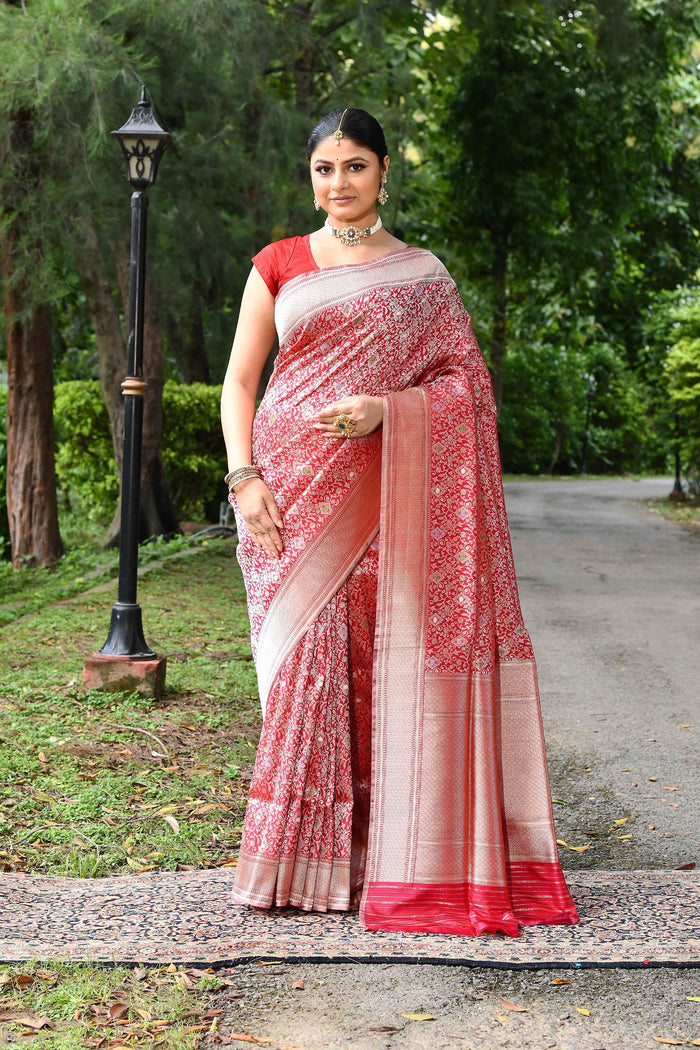
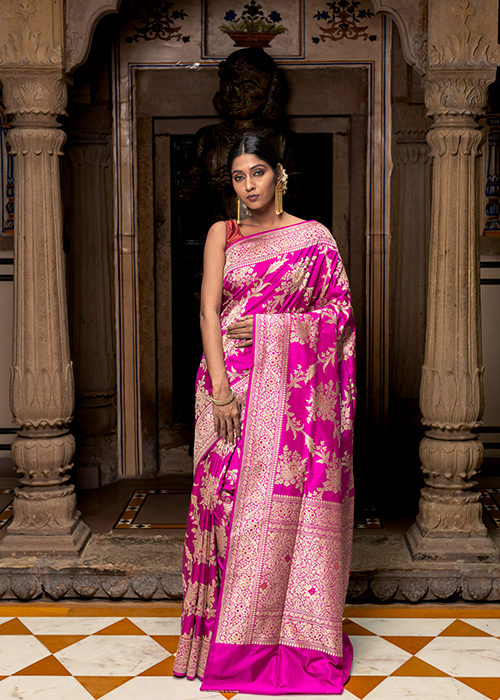
Karwa Chauth-Ready Banarasi Silk Sarees
Real sarees from our Varanasi looms, in traditional suhaag shades — red, maroon, wine, and rani pink.



Getting a good photo after sunset
The sieve moment happens in low light, fast, and usually only once — a little preparation helps.
Warm Indoor Light Beats Flash
A lamp or diya nearby brings out real zari's warm glint far better than a harsh camera flash, which tends to flatten fine motif work.
Keep The Pallu Visible
Since most photos happen from the chest up during the sieve moment, make sure the pallu and its zari border are in frame, not pushed behind your shoulder.
Take One Photo Before The Rush
The actual moon sighting moves fast — get one calm, well-lit photo just before, rather than relying only on the rushed shot itself.
What women usually ask us before Karwa Chauth
Do I have to wear red, or can I choose another colour?
Red and its deeper shades are traditional, but plenty of women now wear their wedding colour or simply what suits them best. The tradition is a guide, not a strict requirement.
Will a heavy Katan silk saree be uncomfortable during a full day of fasting?
A lighter Kadwa booti weave is generally more comfortable than a dense full Jaal piece for a day involving no food or water — worth prioritising comfort over maximum zari density for this particular festival.
Can I wear the same saree I wore on my wedding day?
Yes, many women do exactly that — it carries its own sentimental meaning. If it's too heavy for a full day of fasting, a lighter piece in the same colour family works just as well.
How far in advance should I order?
Two to three weeks is generally enough for our ready pieces in Kadwa booti weaves. If you want a specific full Jaal design made to order, allow closer to a month.
Ready to find your Karwa Chauth saree?
See the full range of traditional suhaag-shade Banarasi sarees, along with every other colour woven in Varanasi.